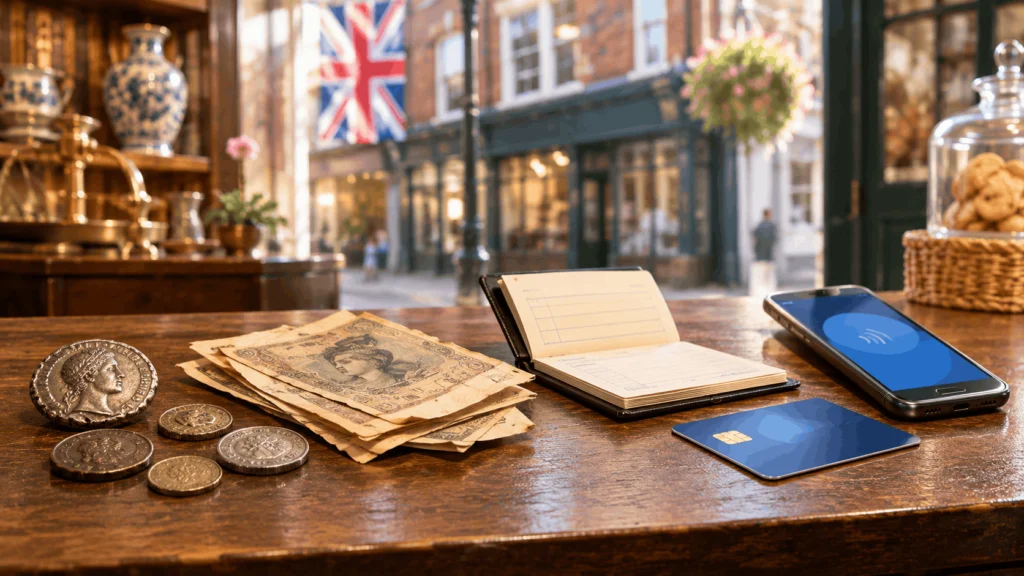
For most of British history, paying for something didn’t involve plastic at all. You handed over a cow, or some grain, or a promise to help fix a roof next spring. Odd as that sounds, the same problem sat under every one of those deals, and it hasn’t gone anywhere: you had to trust the other person. Over a very long stretch, Britain slowly got comfortable trusting coins, then paper, then signals nobody can see.
Why Didn’t Barter Work for Long?
Barter is the oldest system going. You trade one thing for another, with no money in the middle. In a village of forty people, fine. If the miller cheated you, everyone knew by Sunday.
It fell apart once communities got bigger. Economists call the issue a “double coincidence of wants.” Both people have to want what the other is offering, right then. So a farmer with too much wool needs a blacksmith who needs wool (this week, specifically) and also has spare tools lying around. That’s a lot of luck. Once trade stretched between towns, people needed something easier to carry and easier to agree on.
How Did Coins Change British Trade?
Rome supplied it. A Roman coin’s stamped value meant the same in Britain as anywhere else in the empire. The legions left, but the habit stayed. Anglo-Saxon kings struck their own silver pennies, and by Alfred the Great’s reign nobody thought twice about using them.
Then 1066. The Normans kept minting under tight royal control, and later kings spent a surprising amount of effort on weight and purity. They had reason to. Clipping, which meant shaving slivers of silver off a coin’s rim and spending it anyway, was a popular hobby. By the late Middle Ages, pennies, shillings, and pounds were simply what money was.
What Changed When the Bank of England Was Founded?
Quite a bit, though not overnight. The Bank opened in 1694 for two rough reasons: the government needed money to fight France, and lending was close to a free-for-all. Its notes were basically IOUs, paper you could swap for gold.
Merchants weren’t keen at first. You can bite a coin. Paper, less so. But they came around, and after that nobody had to lug sacks of silver to close a big deal. Credit stopped being a favour you asked a friend for and became a normal business tool.
How Did the Industrial Revolution Reshape Banking?
Factories needed money. So did railways and ships and most of what the 1700s and 1800s produced. Banks spread through industrial cities. Checks and promissory notes let firms pay each other without carting cash about, and London grew into one of the world’s big financial centres, with investors ready to fund the era’s grander ideas.
When Did Britain Move Beyond Cash?
Not until the 20th century, really. Electronic systems arrived after the war. Then credit cards, debit cards, and cash machines, plus direct debits and standing orders, which most of us set up once and forget about. It all happened slowly enough that households barely noticed how much had changed.
Why Did Contactless Payments Take Off So Quickly?
Chip and PIN showed up in the mid-2000s, mostly as a security fix. Contactless followed soon after, and people took to it faster than the banks expected. Fintech startups then put payments on phones and watches.
COVID finished the job. Cash started to feel slightly grubby, and plenty of shops went card-only. Now hardly anyone thinks about what happens to your money between the tap and the beep. In about a second, your bank, the terminal, and the card network check and approve the payment. An Anglo-Saxon moneyer would need a sit-down.
What Comes Next for British Payments?
Hard to say. The pattern, though, is that British payments keep reshaping themselves around how people buy and sell, and each step fixed some problem of trust or convenience. Fintech is still moving. If you run a business, a few small habits help:
- Find out how your customers already prefer to pay.
- Add one new option at a time.
- Check your fees once a year, because they creep.
You don’t need to be first. Just try not to be last.